Overview of Deaths by Suicide in Devon
| Trigger warning – this report contains details of suicide statistics and methods which some readers may find difficult or distressing. If you are affected by any of the issues raised, please contact the Samaritans, Tel: 116 123 or via www.samaritans.org |
The report is for professionals and other interested parties and aims to inform work on suicide prevention by providing an overview of deaths by suicide and undetermined injury among Devon residents, registered during the calendar years 2022 to 2024.
Deaths by suicide and undetermined injury are only registered after an inquest has taken place and therefore not all deaths will have occurred during this time period. A death is considered a suicide only when a coroner at an inquest has concluded that the person intentionally took their own life. Deaths by undetermined injury are where the coroner at inquest reaches an open or narrative verdict because the intention of the person is uncertain. Only open and narrative verdicts which are considered deaths by undetermined injury are included. Deaths of Devon residents are included in this audit whether they died in Devon or elsewhere in the country. This report uses the term suicide to refer to both suicide and undetermined injury deaths.
Data sources and definitions
Deaths included in this analysis have been sourced from Office for National Statistics published data, and from the Primary Care Mortality Database using the International Classification of Diseases (ICD10) codes X60-X84 (age 10+ only) and Y10-Y34 (age 15+ only), registered in the respective years. This is in line with the definitions used in the Public Health Outcomes Framework.
Suicide Numbers and Rates
Between 2022 and 2024, there were 297 (2021-23, 293) registered suicide deaths in Devon. This represents an average of around 8 deaths a month. In Devon there were 99 suicide deaths registered in 2024, 91 in 2023, and 107 in 2022. The data for 2022-24 show that Devon has a suicide rate of 13.5 per 100,000 population (2021-23, 13.7) and this is statistically significantly higher than the England rate of 10.9 per 100,000 population (2021-23, 10.7).
Suicide Trends
Figure 1 shows that the rate in Devon has remained at a similar level to the previous reporting period, decreasing very slightly to 13.5 per 100,000 in 2022-2024 from 13.7 per 100,000 in 2021-2023.
Figure 1: Trends in suicide rates, England and Devon
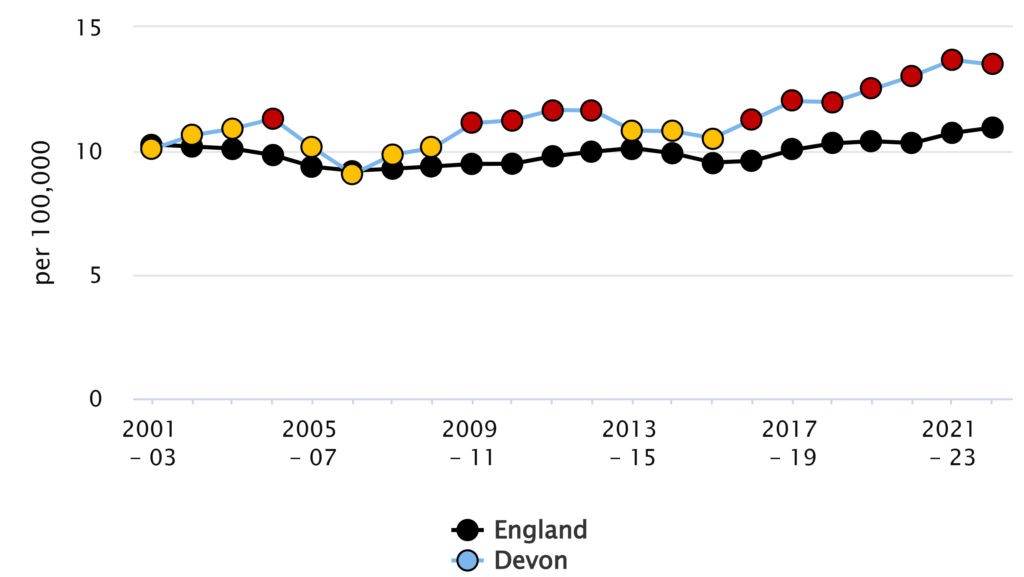
The red circles on the graph indicate where Devon has a statistically worse rate than England, and yellow circles indicate a statistically similar rate to England.
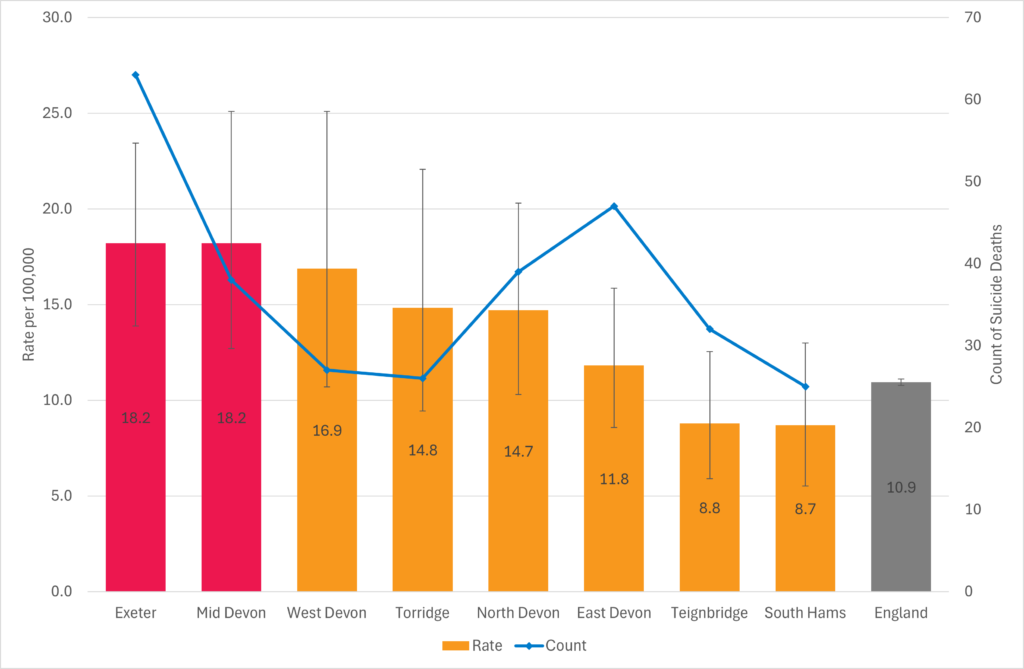
At district level within Devon, Exeter and Mid Devon have the highest district suicide rates at 18.2 per 100,000, and are statistically significantly worse than the England rate. The remaining districts are statistically similar to England. These are shown in Figure 2 below, and are represented as red for worse, orange for similar. The count of suicide deaths for each district is also shown by the markers on the blue line.
Figure 2: Suicide Rates and Counts by Devon Districts
Sex
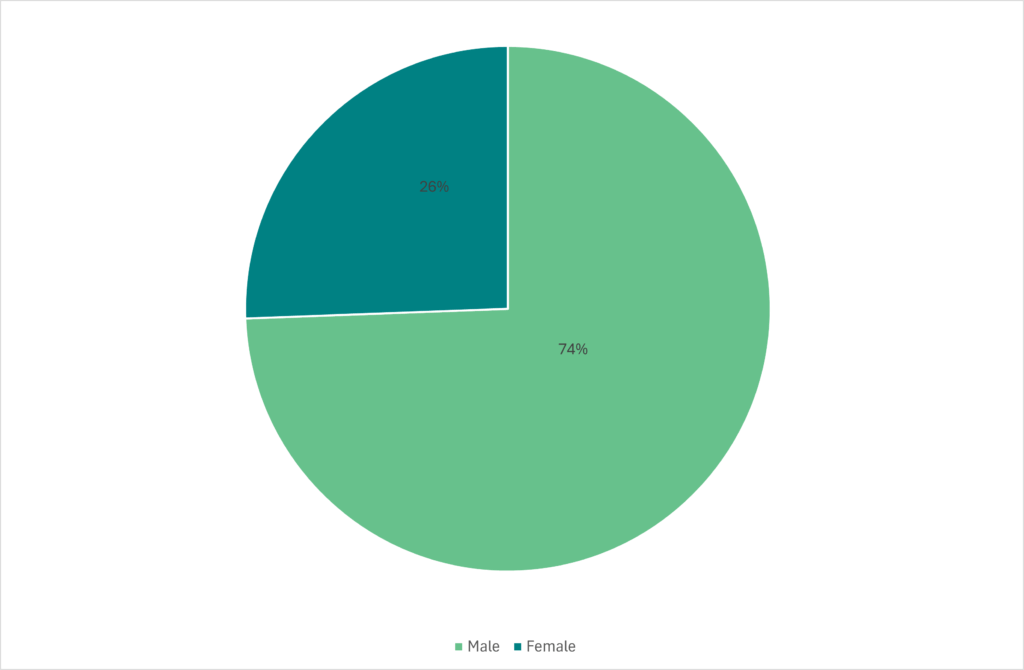
Of the 297 suicide deaths registered between 2022 and 2024, 74% (221 deaths) were in men, and 26% (76 deaths) were in women, this is in line with the proportions seen nationally.
Figure 3: Percentage of Male and Female Suicide deaths in Devon, 2022-24
The male suicide rate for 2022-24 is 20.9 per 100,000 (2021-23, 20.4) and this is statistically significantly higher than the England rate of 16.8 (2021-23, 16.4). The female suicide rate for 2022-24 is 6.6 per 100,000 (2021-23 7.3) which is not significantly different to the England rate of 5.5 (2021-23, 5.4).
Age
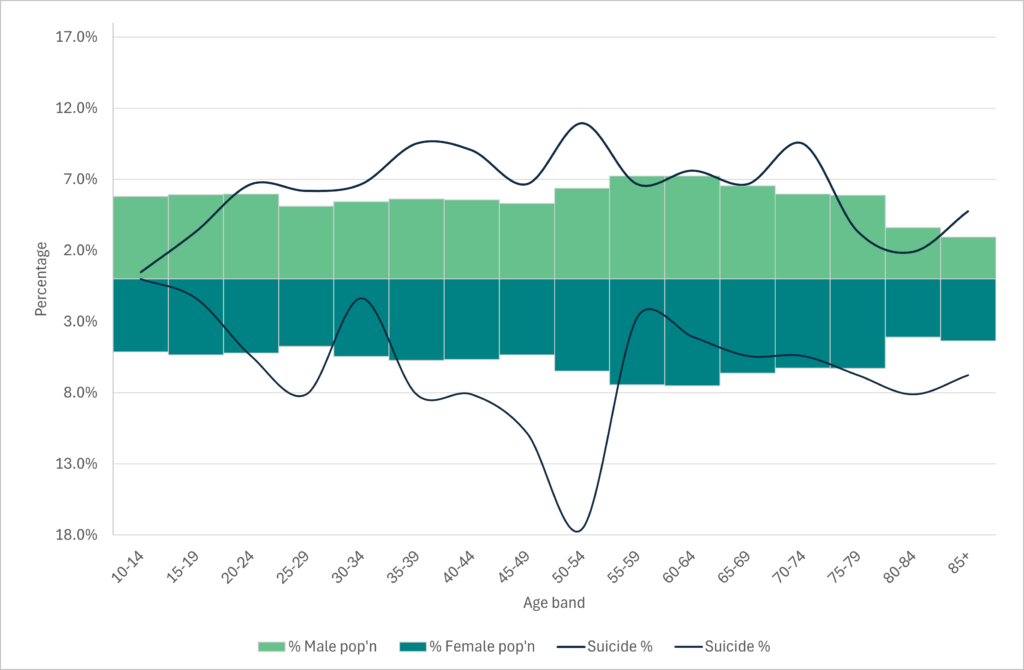
Figure 4 shows the percentage distribution of suicide deaths by sex and age band alongside the percentage distribution of the population of Devon.
For both sexes, we commonly see the highest percentages of deaths within the middle ages. For the 2022-24 period, the highest percentage of deaths were for 50-54 year olds in both men (11.0% of male deaths) and women (17.6% of female deaths).
Figure 4: Percentage of suicide deaths by sex and age band (2022-24)
Registration Delays
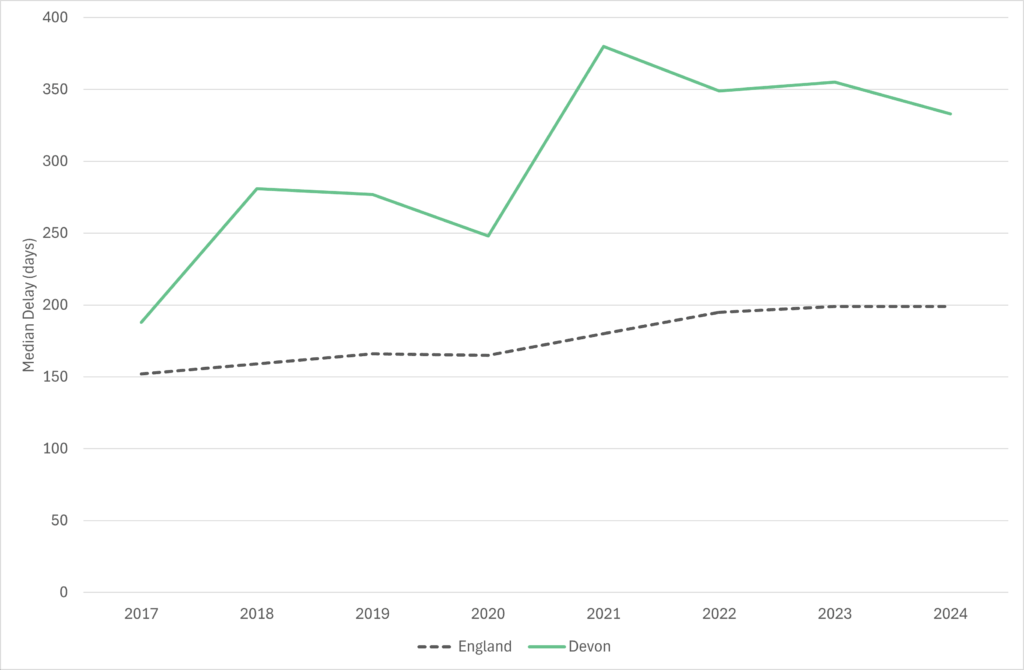
Reported suicide figures are based on the number of suicide deaths registered in each calendar year, rather than the date on which the death occurred. The difference between these dates is known as the registration delay. There are currently higher than average registration delays than pre-pandemic.
In England, the median registration delay for deaths registered in 2024 was 199 days (199 days also in 2023), this is the longest delay since 2001. In Devon the median registration delay in 2024 was 333 days (355 in 2023). See Figure 5.
Figure 5: Trend in Median Registration delays for suicide deaths
Place of Death
Just over half (51%) of suicide deaths in Devon occurred at home, and 34% occurred elsewhere, as shown in Table 1. Note that place of death can be different from the place of the suicide attempt.
Table 1: Suicides by Place of death (2022-24)
| Place of Death | % of Deaths |
| Home | 51% |
| Public Place/Other | 34% |
| Place of care | 15% |
Method
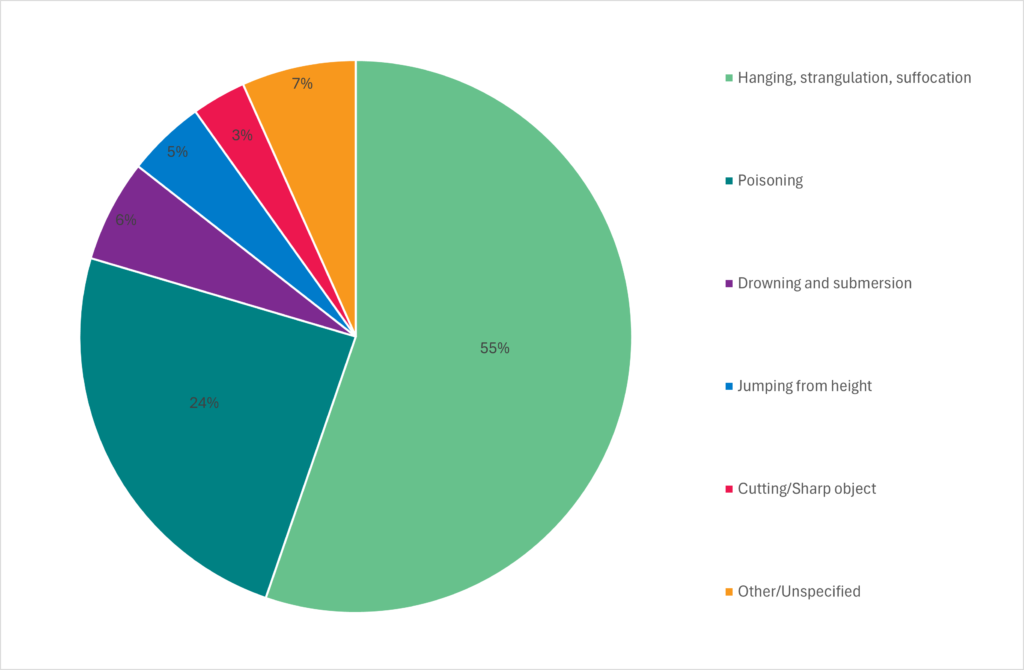
Hanging/suffocation is the most common method used (55% of deaths in 2022-24) followed by poisoning (24%), see figure 6. These are the most common methods for both men and women and is similar to the picture seen nationally.
For Devon in 2022-24 these two methods accounted for 76% of male suicide deaths and 89% of female suicide deaths.
Figure 6: Percentage of Suicide deaths by Method
Deprivation
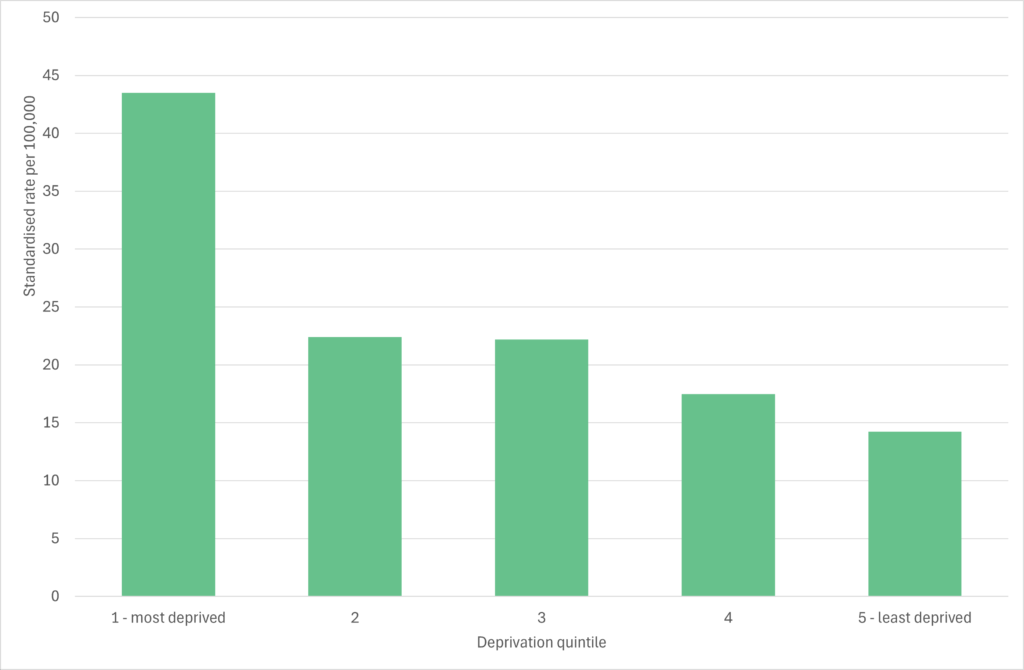
A rapid evidence review of eighteen studies from the UK and Republic of Ireland found that there was a strong association between area level deprivation and suicidal behaviour, where suicidal behaviour increased as deprivation increased (Samaritans, 2017).
Figure 7 shows the suicide rate for Devon tends to be higher in the more deprived areas than the least deprived.
Figure 7: Suicide rate by deprivation quintile 2022-24
Real time suspected suicide surveillance
Public Health Devon collaborate with the Integrated Care Board (ICB), and colleagues in Plymouth & Torbay Public Health teams, to commission a Real Time suspected Suicide Surveillance (RTSS) system for the county of Devon. Data is collated by the Police who are usually the first agency to know about any potential suicide, and shared with the Suicide Response and Data Manager to ensure timely support is offered for the bereaved or those impacted by a death e.g. witnesses & bystanders, and to identify potential clusters and novel methods. This data is shared with a group of key stakeholders to ensure effective immediate response when appropriate as well as identification via monthly meetings of any additional prevention activity that may be beneficial.
Note that only a coroner can conclude the verdict of a death at inquest, hence the use of the term ‘suspected suicide’. There can often be a significant time delay between receiving a notification through Real Time Suicide Surveillance (RTSS) and receiving a coroner’s conclusion at inquest, which is why the RTSS function is important in preventing further deaths.
Further Information
More information on collaborative working in Devon on suicide prevention, including the suicide prevention strategy and action plan is available at:
https://www.devon.gov.uk/adult-social-care/independent-living/health-and-wellbeing/suicide-prevention-in-devon/how-we-work/
References
Samaritans (2017) Socioeconomic Disadvantage and Suicidal Behaviour. Available from https://media.samaritans.org/documents/Socioeconomic_disadvantage_and_suicidal_behaviour_-_Full.pdf
Office for Health Improvement and Disparities. Public health profiles. https://fingertips.phe.org.uk/ Accessed February 2026 © Crown copyright 2026
Office for National Statistics. Suicides in England and Wales by local authority. 2025, Available from https://www.ons.gov.uk/peoplepopulationandcommunity/birthsdeathsandmarriages/deaths/datasets/suicidesbylocalauthority. Accessed February 2026
Report by Louise Cox, Public Health Intelligence, Devon County Council