Foreword
This strategy sets out how Devon will work together to improve people’s health and wellbeing. We will do this by understanding local needs and agreeing shared priorities.
Where you live can shape how long and how well you live. For example, people in poorer parts of Devon may live five to seven years less than those in wealthier areas and may spend up to 15 fewer years in good health. This kind of inequality is not inevitable. That’s why we’re focusing our efforts where they can make the biggest difference.
This is Devon’s plan for doing just that. But it’s more than just a statutory document, it’s a shared commitment to the people of Devon.
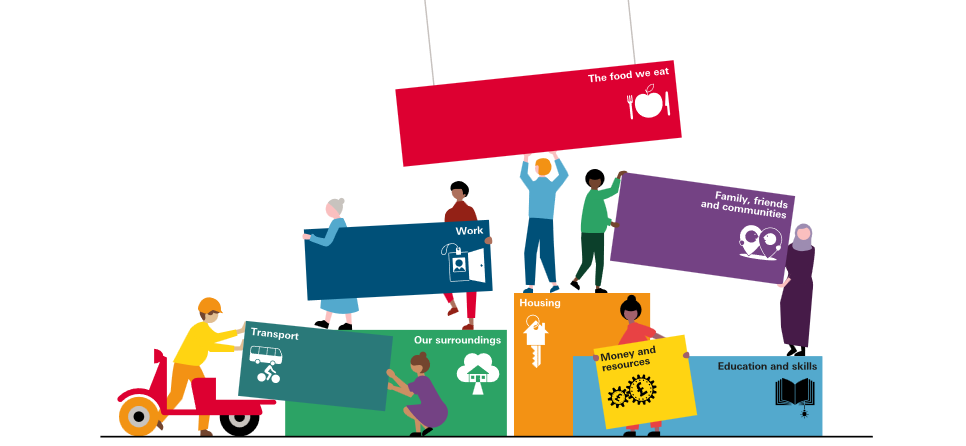
Devon is a beautiful and diverse county, with strong communities and a deep sense of place. But we know that not everyone has the same chance to live well. Where you are born, live, work, and grow up can have a bigger impact on your health than access to healthcare itself. Housing, education, income, transport, food, community connections, and even green space are the building blocks of a healthy life. Yet, for too many people these blocks are crumbling or missing altogether.
This strategy is about focusing on what matters most, together. We will prioritise the areas where working across services and sectors can have the biggest impact. We’ll listen to communities, build on what’s already working, and use our collective strength to drive lasting change.
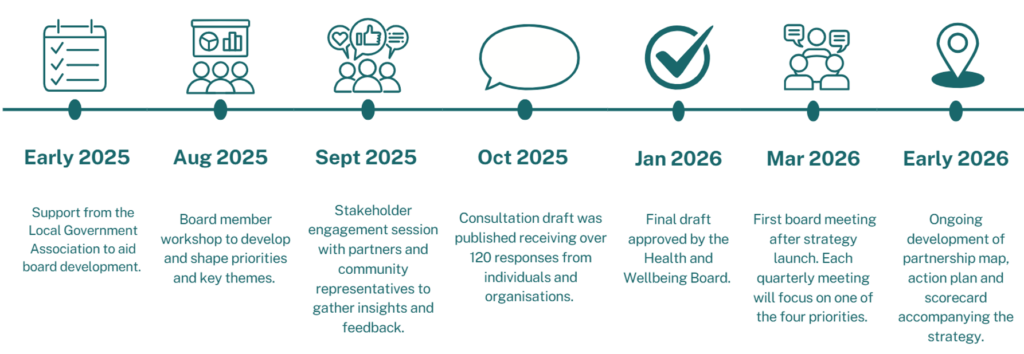
As part of this, the Devon Health and Wellbeing Board is evolving. With support from the Local Government Association and shaped by workshops and interviews the Board is moving from a traditional council committee to a true system partnership.
This means:
- Focusing on a small number of clear, priorities with shared action plans and accountability.
- Asking “So what?” to ensure we always link discussions to our agreed goals.
- Ensuring every item at meetings contributes to meaningful outcomes.
- Strengthening engagement through a wider board network and more inclusive ways of working.
- Putting lived experience at the heart of decisions.
- Reviewing membership so the Board reflects the priorities, partners, and people of Devon.
These changes are shaped by strong feedback from people across Devon, calling for a Board that is more agile, inclusive, and action-focused. We want people in Devon to feel:
- Listened to – your voice matters, and we’ll keep listening.
- Connected – services will work together so you don’t have to repeat yourself.
- Equal – whoever you are, wherever you live, you should have the same chance to live well.
- Hopeful – about the future of your health, your family, and your community.
- Proud – to live in a county that puts people first.
We’ll use a simple scorecard to track progress and stay focused. It will include clear goals such as reducing the gap in healthy life expectancy and use red, amber, and green ratings to show how we’re doing and where we need to do more.
This Joint Health and Wellbeing Strategy gives us a clear focus for the future. It sets out how we’ll work in partnership to build a fairer, healthier, more connected Devon.
We’re proud to lead this work and ready to make it count.

Background
What is a Health and Wellbeing Board?
A Health and Wellbeing Board is a group of people from different organisations who work together to help everyone in Devon live healthier lives.
The board includes people from the NHS, Devon County Council, emergency services and community representatives.
There is a board for Devon County Council, and separate boards for Torbay and Plymouth.
They listen to what local people need to stay healthy. They work to make services and systems easier to use and better joined-up.
The boards aim to improve health for everyone, especially for people who need more support.
By law, these boards must work together to understand local health needs and to create a plan for improving health in their area.
The board is mainly a partnership group. It does not make big decisions on its own but helps organisations work well together. Most boards are led by a senior councillor and include representatives from the NHS, Healthwatch and the local authority. Other members can be added if the council chooses.
What is a Joint Health and Wellbeing Strategy?
A Joint Health and Wellbeing Strategy is a plan that explains what a local area will do to help people be healthier.
It is based on data that shows what people’s health is like, and on voices and stories from local people about their experiences.
A small number of key priorities are chosen, and we work on them together through the Health and Wellbeing Board.
The aim is to help people live longer, healthier lives and to make health fairer for everyone. Right now, health isn’t fair because some people have more opportunities to stay healthy than others. For example, some jobs or living conditions make people sick more often.
Making health fairer means reducing these differences so that where you live, how much money you have, or your background doesn’t decide how healthy you can be. The strategy sets out what we want to improve, how we will do it and how we will check progress.
It links with other local plans and will be updated as needs change. Our local partnership map shows what other strategies and plans we are working alongside in Devon.
Strategy Development Timeline
The Building Blocks of Health
Our health is one of our greatest assets. It enables us to live happy, fulfilling lives and reach our potential.
But not everyone in Devon has the same chance to live well. Some people become unwell earlier or die younger than they should. That’s not right, and we want to change it.
The NHS is vital, but it only accounts for about 20% of the factors that shape our health. The other 80% comes from the conditions of our everyday lives.
By focusing on what makes up our health outside of the NHS, we can create better opportunities for everyone to live well.
Looking at health beyond just the NHS means looking at the building blocks that shape our health and wellbeing things like good housing, education, secure jobs, and clean environments.
When these building blocks are strong, people are more likely to thrive, stay well for longer, and avoid preventable illness.
www.health.org.uk/what-makes-us-healthy
| Example: Good housing helps people stay warm and safe. This leads to fewer illnesses, like chest infections or asthma. This results in better physical and mental health. This means people can live healthier and more enjoyable lives. |
What are the Building Blocks of Health? Things like:
- A safe, warm home
- Enough money to live on
- Access to clean air and green spaces
- Support from family and community
- Good education and skills
When these building blocks are missing or crumbling, health suffers. Cold homes, low income, poor transport, and isolation can lead to stress, illness, and shorter lives.
Why This Matters
Building a healthy society is like constructing a strong building, you need the right building blocks in place. Right now, too many of these blocks are weak, crumbling or simply missing for many people in Devon. But we can change this.
Our Approach
We use a ‘Health in All Policies’ approach. That means thinking about health in everything we do, like housing, transport, education, jobs and the environment not just in the NHS.
Because 80% of our health is shaped by the opportunities we have and the places we live, work, and play.
By improving the building blocks of health, affordable homes, well paid jobs, safe communities, and access to nature we can aim to give everyone in Devon the opportunity to live a healthy, happy life.
| Example: Access to healthy food is a building block of health. If people have affordable fresh fruit and vegetables, people can eat balanced meals. This helps keep hearts healthy and reduces the risk of disease before they even start. |
What influences our health?
Our health is made up from multiple factors. Just 20% is due the health care we receive, e.g. GP appointments and NHS care. The rest of our health is shape by our everyday lives. These include:
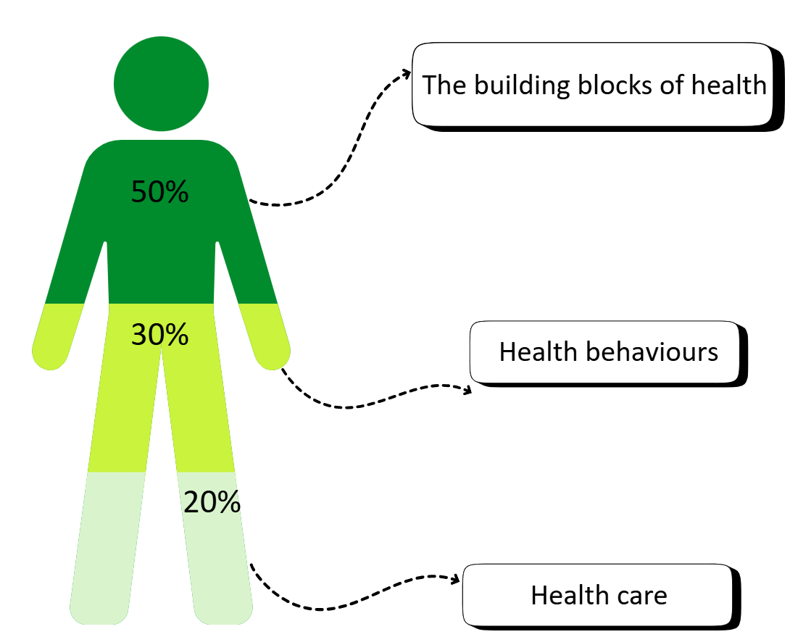
50% of our health is shaped by the building blocks of health. This includes things like our income, education, employment, housing quality, air quality, and access to green spaces.
30% of our health is impacted by health behaviours. What food we have access to, if we can be physically active, our smoking and alcohol use. However, it’s important to remember that these too are impacted by our surroundings. For example, what we eat is shaped by our income, the time we have available, and what shops etc are available locally. Smoking is often used as a coping mechanism to deal with stress, made worse by things like low pay and isolation.
20% is shaped by health care. Both the access healthcare services and quality of care we receive.
CORE Principles
At the heart of this plan are our CORE principles.
These principles will guide how the Health and Wellbeing Board makes choices and works. Every action the board takes will consider our CORE principles.
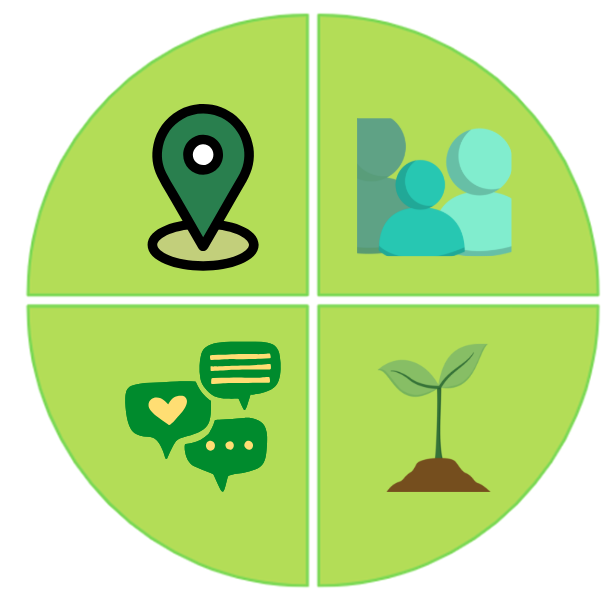
Caring for people and places
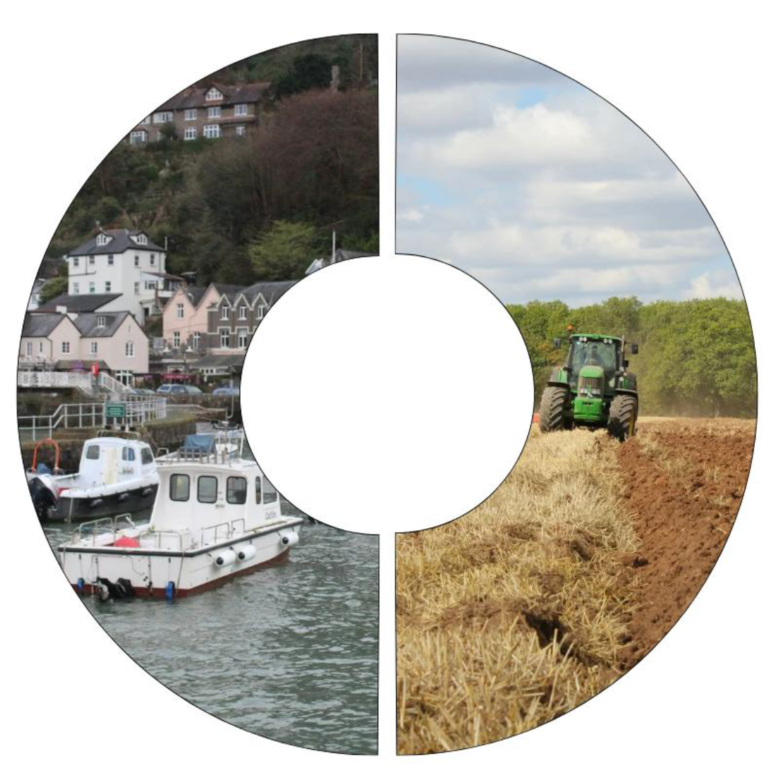
Protecting health, places and access to nature. We are committed to ensuring everyone in Devon has clean air, safe water and access to green and blue spaces. This is about creating a healthier, more resilient future for all.
Opportunities for All
We want to make life fair for all. That means removing barriers and opening doors, so everyone has the same chances, no matter who they are, where they live or their background.
Roots for Life
Support people to grow and thrive at every stage of life, developing strong roots in childhood that support all routes of life throughout adulthood and older age.
Engage and Empower
We will work closely with people, listen well and act together. We will share ideas and build trust to ensure people in Devon have their voice shape decisions.
Caring for people and the places we live
Looking after our health means looking after where we live. Tackling climate change and planning for its effects helps protect people’s health and wellbeing by maintaining vital building blocks of good health: clean air, safe green spaces, chances to be active, and healthy food.
Access to green spaces (parks, woodlands and fields) and blue spaces (rivers lakes and the coast) is vital for our physical and mental health. These places give us room to exercise, relax and connect with nature. Reducing stress, improving fitness and supporting social connections. In Devon our countryside, moors and coastlines are part of what makes life here healthy and enjoyable. Protecting them means protecting opportunities for everyone to stay active and well.
In Devon, the link between climate and health is clear. Storms and floods damage roads and rail lines. This makes it harder to get to work, school, and healthcare. Transport is only one example. Changing weather also affects homes, schools, and local businesses. It can damage green spaces, reduce air quality, and make outdoor activity harder. Things we all need to keep us healthy.
Climate change is already happening. It affects our daily lives. Acting now keeps these foundations strong for everyone. By making climate part of our plan, we protect clean air, safe spaces, active lifestyles, and strong communities. These are some of the building blocks of good health.
Opportunities for all
To live well, everyone needs the building blocks of good health. This means a safe home, enough money for essentials, and access to services. But in many parts of Devon, these building blocks are missing.
Some people face bigger challenges:
- Struggling to afford food and other essentials
- Living in cold, damp homes that harm health
- Finding work or being paid very little
- Experiencing discrimination, including unfair treatment, because of things like where they live, age, disability, gender, ethnicity, religion, being LGBTQ+, being pregnant, or having care experience.
When one or more of the building blocks of health are missing, it harms both our physical and mental health. In many areas of Devon, poverty and low pay are common. Services can be hard to reach. Rising living costs make life even harder. But challenges are often unique to areas and people. Rural areas like Torridge and West Devon face different challenges compared to coastal towns such as Ilfracombe and Teignmouth.
Our priority is to understand where the need is greatest and make sure opportunities are there for everyone. This means tackling discrimination and removing barriers. It also means using a trauma-informed approach. This means treating people with care and understanding, knowing that past experiences can shape their present. Helping services understand the impact of past experiences and respond with care.
We know the best plans come from listening to people who have lived through these challenges. Projects like the Ilfracombe Poverty Truth Commission show how powerful real stories can be in shaping solutions.
Roots for Life
Everyone in Devon should have the building blocks for health.
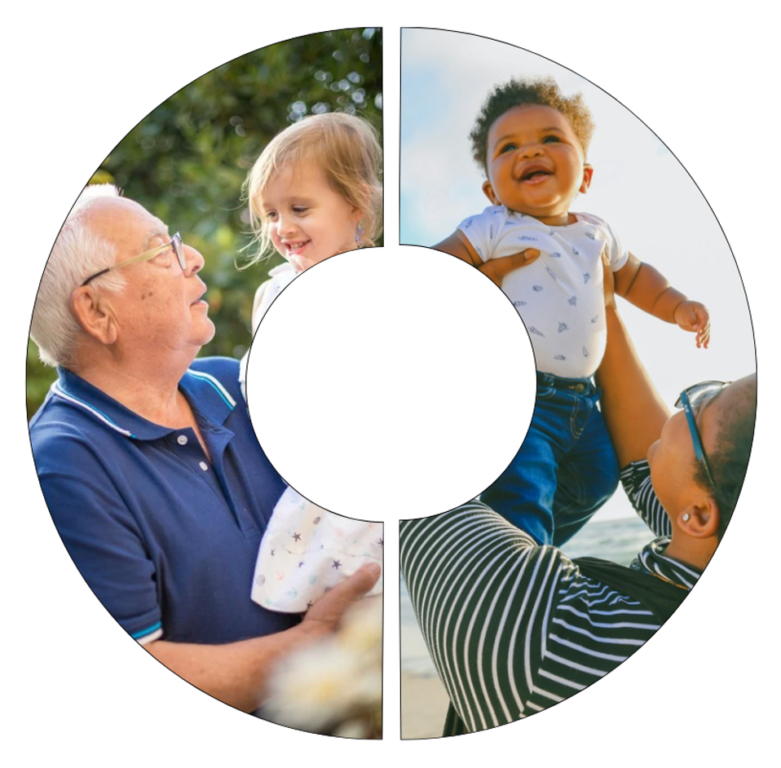
At every stage of life, we need strong building blocks of health. For example, children need support, learning and care to grow into confident adults. Adults need good jobs, secure housing and access to services that keep us stable and healthy. Older adults need safe homes, reliable transport and places to connect.
Everyone needs a chance to stay active and involved. Without these, people risk loneliness, poor health and loss of independence.
We want to support every stage of life, and part of this is committing to an Age-Friendly Community, where spaces and services help people thrive.
Roots for Life is about supporting people through every stage of life. It means making sure everyone; children, adults, and older people; have what they need to stay healthy and well. This includes people with long-term health conditions. Whatever your age or health, you should have the right support and opportunities.
By building strong foundations early and adapting them as people age, we can aim to stop problems, reduce unfairness, and help everyone in Devon live healthier for longer.
Engage and Empower: Working Together
To make Devon healthier, we need more than good plans. We need to work together. When we all feel heard, we build better services and spaces that support health.
Right now, not everyone feels listened to. Many people in Devon feel left out of big decisions. We are changing how the Health and Wellbeing Board works. This means:
- Who is involved: The board is reviewing and changing who is involved with the board
- How we listen: We will go out to people, not wait for people to come to us
- How we act: We will share clear updates on what we have done. We will be open and honest about what we are doing.
- How we talk: We will use clear language. We will share what we hear and act on it.
We will also involve local groups. Not just listening but working with them to design and shape services together from the start.
By working with people, not just for them, we can strengthen the building blocks of health: safe places, good transport, jobs, and social connections. When people feel included, Devon becomes a fairer, healthier place for everyone.
Priorities
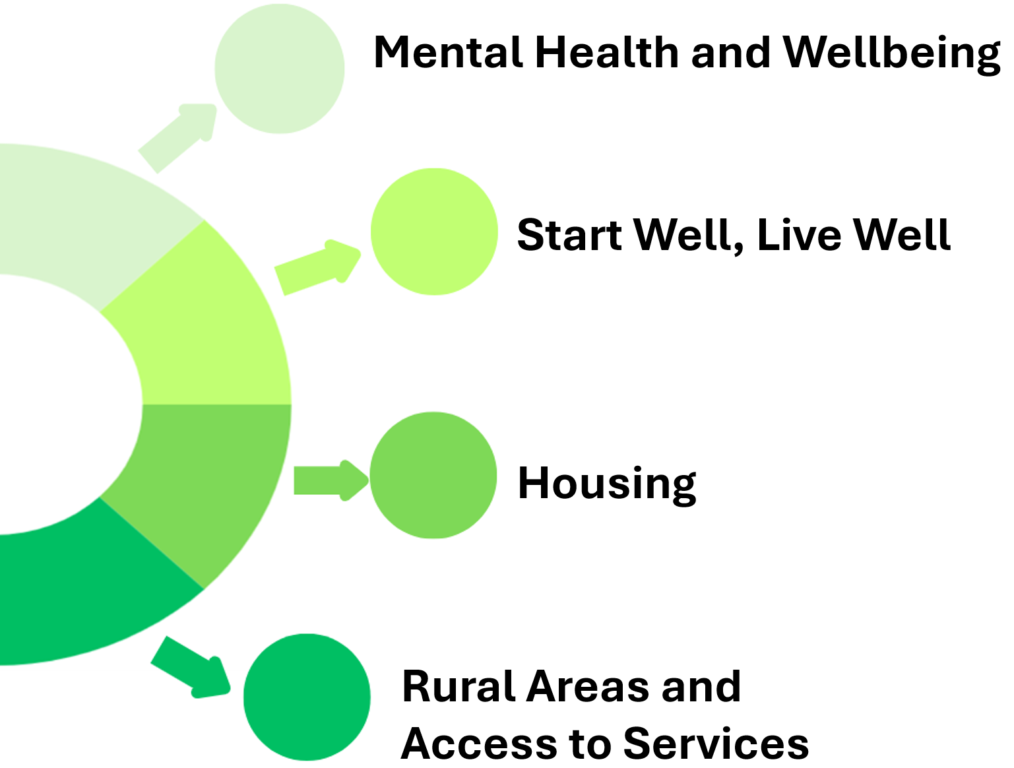
Our Four Priorities
These priorities were shaped together with the people who matter most. We began by bringing board members and partners into the same conversation, then continued to engage widely listening, sharing ideas, and refining our thinking based on feedback. Every step helped us focus on the areas where change is most needed.
Why these priorities?
We picked a small number of priorities where we can make the biggest difference. These are the things that matter most for health and wellbeing in Devon. They are not just words. They are a call to action. By focusing on these and working together, we can make real change for our communities.
Mental Health and Wellbeing
Good mental health impacts how we think, feel, learn, work, and connect. When vital building blocks of health and wellbeing like education, employment, or relationships start to crumble, it can affect our mental health. When we struggle with our mental health, everything else is harder and it can further weaken the building blocks we need to stay physically and mentally healthy.
When we talk about mental health and wellbeing in this plan it includes; wellbeing, common and severe mental illness as well as learning disabilities, neurodiversity and dementia.
The Challenge:
- More children and young people are feeling sad, worried or stressed
- People with additional needs and those with dementia often struggle to find the right support
- Stigma and fear stops many from asking for help
- Services can often be confusing and not well joined up, making it hard for people to know where to turn.
Our goal: A Devon where mental health support is easy to find, close to home and free from stigma.
We will work towards Devon being a trauma-informed county across health care and other services, so people feel understood and supported.
We will:
- Support trauma informed practice across Devon both within our mental health services but also beyond. This means understanding how trauma affects people and creating safe, respectful environments that avoid re-traumatization and prevents people having to continually retell the same traumatic story.
- Help make early help easy to access, before problems grow.
- Support and encourage the joining up mental health with other support like housing and addiction services.
- Actively involve and listen to local organisations on solutions and work to remove barriers.
Mental health is a foundation for living well. It affects how we think, feel, learn, work, and connect. Without strong mental health, other building blocks like education, employment, and relationships weaken. This theme links directly to our CORE principles, guiding how we create a healthier, fairer, and more resilient Devon.
| Caring for people and places | Access to clean, green spaces supports mental wellbeing. Walking and cycling improve physical and mental health. Nature helps older people stay active and be less lonely. |
| Opportunities for all | Everyone should have access to mental health support. Meaningful work or activities improve wellbeing. Support should be available for all, regardless of your background or location. |
| Roots for life | Supporting children’s mental health early builds resilience for life. Families, schools, and communities play a key role. Adults and older people need support during major life changes like job loss or bereavement. |
| Engage and empower | People with lived experience know what works. We will listen and act. Community groups help people feel connected. Support should be easy to find in trusted local places. |
Start Well, Live Well
We want all children and young people in Devon to have the best start in life. This means support from before birth, through to age 25, so they grow up healthy, safe, and ready for the future.
The Challenge:
- Not all children get the same opportunities, especially in areas with more poverty.
- Children with disabilities, neurodivergence, or in care may lack the right support.
- Services can be confusing or poorly joined up.
- Fewer safe spaces for families to meet, play, and learn.
- Growing online risks, for example bullying and harmful content.
- Many young people leave the county for education and to find the right work.
Our Goal: Every child in Devon should feel safe, cared for, and supported to thrive. A strong start builds health, confidence, and success in school and friendships. We want young people to stay, learn, work, and enjoy life in Devon.
Our Focus:
- Encourage and support services to support children and young people from birth to 25, not just until they turn 16.
- Support and endorse the national Best Start in Life programme.
- Provide early help for families before problems escalate.
- Include children and young people’s voices in decisions.
- Keep children safe online and protect them from harm.
- Support parents and carers to give children the best start.
- Prioritise those with additional barriers, such as children with disabilities, neurodivergent children, those in care, black and minority ethnic groups, LGBTQ+, and those affected by trauma or adverse childhood experiences.
Every child and young person in Devon should have the best start in life from pregnancy through to age 25. This means growing up healthy, safe, and ready for the future. A strong start builds confidence, wellbeing, and success in school, friendships, and later life.
This connects directly to our CORE principles, ensuring fairness, resilience, and empowerment for all.
| Caring for people and places | Protect green spaces so families have safe places to play and relax. Promote outdoor learning and nature-based activities to support wellbeing and environmental connection. Design healthier homes and schools with clean air and energy-saving features to protect health. |
| Opportunities for all | Ensure children in all areas including rural and poorer areas have equal access to support, education, and health services. Help young people with disabilities or in care get the support they need to thrive. |
| Roots for life | Support parents during pregnancy and early childhood to build strong family foundations. Work with schools, nurseries, and youth services to nurture emotional wellbeing at every stage. Encourage healthy routines around sleep, food, and play from day one. Support community groups that bring generations together to foster inclusion and connection. |
| Engage and empower | Listen to children, young people, and families about their needs and experiences. Support youth groups, parent networks, and local communities to shape and deliver services that work for them. |
Housing
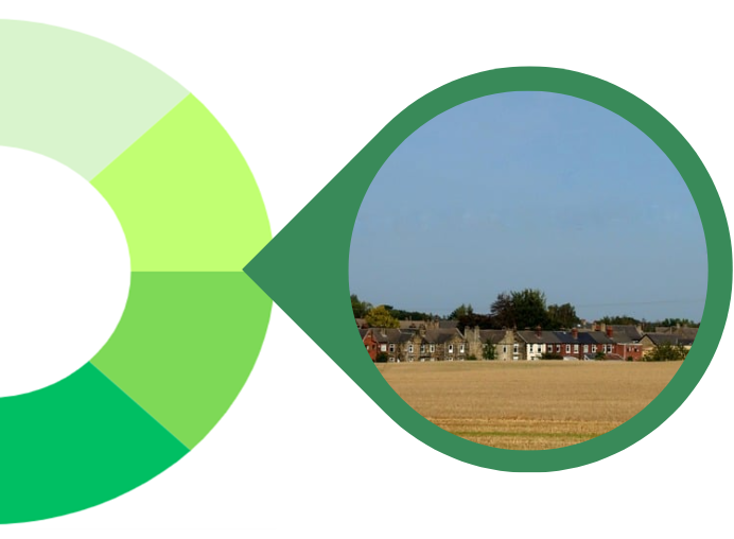
Many people in Devon struggle to find homes that are safe, warm and affordable. A good home is an essential building block of good health, but often housing doesn’t meet peoples needs. We want to ensure everyone in Devon has a house that supports their health.
The Challenge:
- Poor housing can lead to health problems like asthma, stress and anxiety
- Many homes are cold, damp or in need of repair
- Housing costs are too high, making it hard for workers and young people to afford a place to live
- Some families live in temporary or unstable accommodation
- Homes are not always close to schools, jobs or transport links.
Our Goal: Everyone in Devon should have a home that is safe, warm and affordable. Good housing helps people stay healthy, keep jobs and feel apart of their community. It also supports climate change goals by using less energy.
Our Focus:
- Support the recommendations of the Devon Housing Commission
- Promote planning that brings home, jobs, schools and transport together
- Encourage housing plans that link health, climate and local needs
- Support new developments that include public and active transport options
- Advocate for energy efficient homes to save money and protect the places we live.
By working together, we can make sure housing in Devon helps people live well and thrive.
A safe, warm, and affordable home is essential for health and wellbeing. Housing affects everything from family life and education to ageing well and staying connected. This theme links directly to our CORE principles, ensuring homes and communities support people throughout life.
| Caring for people and places | Warm, energy-efficient homes reduce bills and protect health while helping the planet. New housing near parks, green spaces, and safe walking routes encourages active lifestyles. Building with sustainable materials protects the environment for future generations. Green spaces also help older people stay active and connected, reducing loneliness. |
| Opportunities for all | Affordable homes helps families stay close to jobs, childcare, and schools. Stable homes improve school attendance and educational outcomes for children. |
| Roots for life | A secure home in early childhood builds strong foundations for lifelong health and wellbeing. Good housing supports family routines, sleep, healthy eating, and safe play. As people age, homes that are warm, safe, and adapted for changing needs (like step-free access) are vital for ageing well. |
| Engage and empower | We will listen to families and communities about their housing needs. New homes should reflect what matters to people proximity to schools, health services, and community spaces. People of all ages should help shape housing plans that support their lives. |
Rural Areas and Access to Services
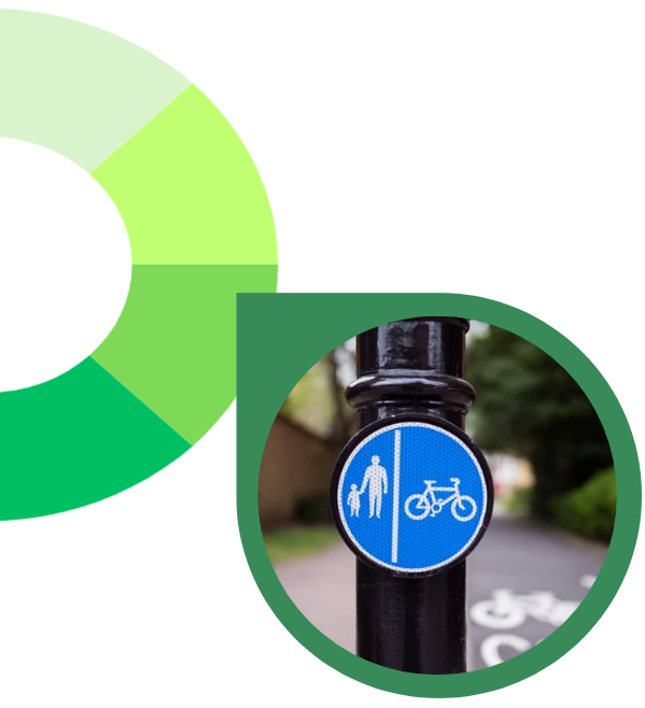
Many people in Devon live in small towns, villages, or coastal areas. These are beautiful places to live, but it can be hard to reach essential services like healthcare, schools, jobs, and transport. We want to make sure everyone can get the help they need, wherever they live. We recognise that isolation isn’t just about geography, it’s also about systems that don’t reach far enough.
The Challenge:
- Long distances to doctors, dentists, and pharmacies mean some people miss appointments.
- Buses and trains can be expensive, infrequent, or unavailable.
- Poor broadband and phone signal make online services hard to use.
- People struggle to reach college or jobs.
- Isolation and loneliness are more common in remote communities.
Our Goal: People in rural and coastal Devon should have the same chances as everyone else to live well, stay safe, and access support easily. We want Devon to be a place where location does not limit opportunity.
Our Focus:
- Raise awareness of the extra challenges faced by rural and coastal communities.
- Join up services like health, education, housing, and transport to work better together.
- Ensure local voices shape decisions and plans.
- Advocate for rural communities in new policies and developments.
- Support the improvement of connectivity, both physical (transport) and digital (broadband) to reduce barriers.
- Support improving digital skills and digital access across Devon
We want to make sure everyone can access the help they need, wherever they live. This theme connects directly to our CORE principles, ensuring fairness, sustainability, and community voice.
| Caring for people and places | Safe, low-carbon transport options like walking, cycling, and public transport reduce pollution and improve health. Better local access reduces long car journeys, supporting cleaner air. Good broadband enables digital services, reducing travel and helping older people stay connected and less isolated. |
| Opportunities for all | Where you live should not limit your chances. Rural communities need equal access to education, childcare, healthcare, jobs, and social activities. Affordable transport and strong digital connectivity are essential for fairness, especially for older people who face barriers without these options. |
| Roots for life | Living in a rural or coastal area should not affect access to education, work, or health services. Early help, health checks, and support should not depend on owning a car or having strong signal. We will bring services closer to people throughout every life stage. |
| Engage and empower | Local people know what works best in their communities. We will listen to rural voices when planning services, ensuring solutions reflect real needs rather than assumptions. |
Making a Difference
We are taking action:
We know people sometimes feel we aren’t listening or acting. This strategy is about proving that’s changing. We are committed to working in a new way, together.
Our aim is simple: ‘to help people in Devon live happy, healthy, and safe lives’.
We know things change, so what matters now might look different in the future. That’s why every year we will:
- Review what we’re doing
- Check our goals and how we work together
- Make changes if needed
- Keep listening to what you tell us
This strategy is just the first step towards change. We are committed to working differently with communities, not just for them and showing real progress. We’ll use facts and numbers (like how many people get the help they need) and listen to what people tell us. Your voice matters as much as the data.
How will we know we’re strengthening the building blocks of health in Devon?

| Action Plan (coming later in 2026) | Partnership Map | Scorecard (coming later in 2026) |
| The Action Plan will set out clear, measurable steps for each year of the strategy, ensuring accountability and progress. Each action will include timelines, milestones, and named leads who are responsible for delivery. This approach will make it clear who is doing what and when, helping us stay focused and transparent. It will also allow us to monitor progress and adapt quickly if challenges arise. | The Partnership Map will show the organisations and networks working together across Devon. It will highlight how different strategies and initiatives are connected, helping us identify overlaps and prevent duplication. By mapping these relationships, we can demonstrate where alignment is possible and where collaboration can be strengthened. This will make it easier for partners to see the bigger picture and work more effectively as a joined-up system. | The Scorecard will track progress against our agreed goals using a clear traffic-light system: Red = Needs significant improvement or urgent action. Amber = Some progress made, but more work required. Green = On track and going well. Our Public Health Intelligence Team will develop a set of indicators and data sources to measure success. This will ensure that we are not only monitoring activity but also assessing impact. The Scorecard will keep us accountable, provide transparency for partners and the public, and help us focus on areas that need extra attention. |
We have already started making a difference:
- Developed a Partnership Map to show who’s working together. This helps see how strategies connect to strengthen our work.
- Carried out a public consultation with over 120 responses. These voices have shaped our plan to focus on what matters most in Devon.
- Held meetings with individuals and organisations across Devon, including community representatives and senior leaders, to gain their support and thoughts.
- Changing how the Health and Wellbeing Board works and what it delivers to make it to ensure people in Devon are being heard.
Let us show you we mean it.
This plan marks the beginning of a new way of working: one that listens, acts, and delivers real results for Devon.
It is built on the core building blocks of health, such as mental wellbeing, housing, education, and access to services, ensuring that every action we take strengthens the foundations for healthier lives.
| Date Published | Thursday 8th January 2026 |
| Date Last Updated | Thursday 8th January 2026 |